Why Do Ants Keep Coming Back After Treatment
Why Do Ants Keep Coming Back After Treatment in Johns Creek Homes?
You spray the counter, watch a line of ants scatter, and feel like the problem is handled — until the same trail reappears a few days later, sometimes in a completely different spot. This cycle is one of the most common frustrations Johns Creek homeowners bring to a pest control call, and it almost always comes down to the same root cause: the ants you're spraying were never the actual infestation.
The Ants You See Aren't the Infestation
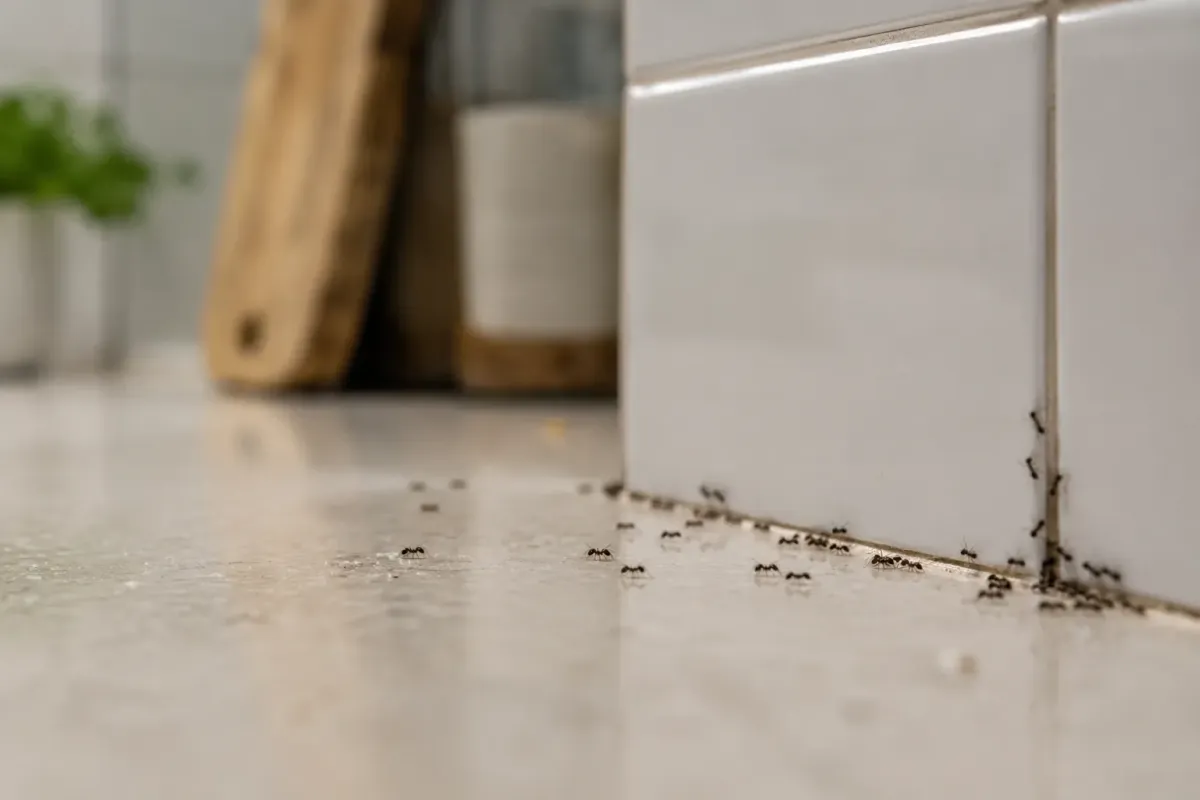
Every ant walking across your kitchen counter is a forager — a worker sent out specifically to find food and bring it back to the colony. Killing foragers with a spray or wipe feels productive, but the colony itself, including the queen (or queens) actually responsible for the population, stays completely untouched in a nest that could be in a wall void, under a slab, or somewhere out in the yard. As long as she's alive and laying eggs, the colony simply replaces every forager you kill, often within days.
Why Store-Bought Spray Can Backfire
Here's the part that surprises most homeowners: spraying doesn't just fail to solve the problem — with certain species, it can actively make things worse. Several common ant species, including odorous house ants and carpenter ants (both regularly found in Johns Creek homes), respond to a perceived threat by budding: the colony splits into multiple smaller satellite nests to protect itself. What started as one nest with one queen can become several nests scattered across your property, each capable of rebuilding the population independently. A spray that scatters ants rather than eliminating the colony can turn a single, treatable nest into a multi-location problem.
Not All Ants Respond to the Same Treatment
Ant control isn't one-size-fits-all, and using the wrong approach for the species you actually have is another common reason treatment fails.
Odorous house ants — recognizable by the rotten-coconut smell they release when crushed — are common indoors around kitchens and bathrooms, form large colonies with multiple queens, and are especially prone to budding when disturbed by contact sprays.
Carpenter ants nest in wall voids and can cause real structural damage over time, favoring moisture-compromised wood; they typically require locating the nest directly rather than relying on surface treatment alone.
Argentine ants form expansive, interconnected colonies that can span multiple properties, making a single-point treatment largely ineffective against the broader network.
Pavement ants typically nest under driveways, walkways, or foundation slabs, which requires a different treatment approach than an indoor kitchen infestation.
Applying the wrong bait or product for the species present is a common reason a homeowner's second and third treatment attempt fails just like the first.
The Pheromone Trail Problem
Ants navigate largely by scent. A forager that finds a food source lays down a pheromone trail on its way back to the nest, and other workers follow that same invisible path — which is why ants so often reappear in the exact same line, day after day, even after a thorough cleanup. Wiping the visible trail with a household cleaner removes some of that scent, but it rarely eliminates it completely, and new foragers can pick the trail back up faster than most homeowners expect.
Conditions That Keep Inviting Them Back
Even a well-executed treatment can be undone if the underlying conditions that attracted ants in the first place are still in place:
Food sources — crumbs, spills, pet food left out, or improperly sealed pantry containers
Moisture — leaky faucets, condensation, or damp areas near sinks and appliances
Structural gaps — cracks in the foundation, gaps around utility penetrations, or unsealed spots around windows and doors
Vegetation and mulch touching the exterior, which gives outdoor colonies a direct, sheltered path to the house
A colony treatment that doesn't also address these conditions is treating a symptom while leaving the invitation open for the next colony to move in.
What Actually Breaks the Cycle
Effective ant control generally follows a different structure than most DIY attempts:
Species identification, since the right bait and approach depends entirely on which ant is actually present
Targeted baiting rather than contact spray, allowing foragers to carry bait back to the nest and reach the queen — the only approach that addresses the colony directly instead of just the visible workers
Locating and treating the nest itself when accessible, rather than relying solely on baiting
Sealing entry points and addressing food/moisture sources to prevent a new colony from moving into the same conditions
Follow-up monitoring, since colony elimination via bait takes time — a sudden return to spraying mid-treatment can undo the process by disrupting the very foragers carrying bait back to the nest
FAQ SECTION
Q: Why do ants keep coming back even after I spray them? A: Spray only kills the visible foragers, not the queen or the colony itself, which remains protected in a nest you likely can't see. As long as the queen survives, the colony continues producing new workers to replace the ones killed, which is why the same trail often reappears within days.
Q: Can spraying ants actually make the problem worse? A: Yes, with certain species. Odorous house ants and carpenter ants in particular can respond to a disturbed nest by budding — splitting into multiple smaller satellite colonies — which can turn a single, treatable nest into several scattered ones.
Q: What's the most common ant species causing problems in Johns Creek homes? A: Odorous house ants are one of the most frequently reported indoor ant species in the region, easily identified by the rotten-coconut smell they release when crushed. Carpenter ants are also common, particularly in homes near wooded lots, and warrant closer attention due to their potential for structural damage.
Q: Why does ant bait work better than spray for a recurring problem? A: Bait is designed to be slow-acting enough for a forager to carry it back to the nest and share it with the colony, including the queen, rather than killing only the ant that contacts it directly. This is what allows bait to address the actual source of the infestation instead of just the visible symptoms.
Q: Do I need to clean up ant trails, or will bait alone solve the problem? A: Both matter. Cleaning reduces the pheromone trail drawing new foragers to the same spot, while sealing entry points and removing food and moisture sources prevents a new colony from moving into the same attractive conditions after the current one is eliminated.
Tired of the Same Ant Trail Coming Back?
A professional inspection identifies the exact species and nest location, so treatment addresses the actual colony instead of just today's visible ants.
Have a pest problem? Call Max Pest Solutions at 404-424-9200.
