Attic Mouse Removal in Cumming
How to Get Rid of Mice in Your Attic: Pest Control in Cumming
If you’re hearing scratching sounds at night or noticing a strange smell coming from your ceiling, there’s a good chance you may be dealing with mice in your attic. In Cumming, this is one of the most common issues homeowners face—especially in homes where the garage connects directly to the attic space.
Based on hands-on field experience handling attic mouse cases locally, the key to solving the problem isn’t just trapping mice. It’s understanding how they got in, what damage they’ve already done, and why most DIY methods fail.
Early Signs of Mice in the Attic
In most cases, homeowners don’t see the mice at first—they hear or smell them.
The most common complaint is scratching or movement noises at night coming from the ceiling or attic. In some cases, there’s also a noticeable odor that starts developing over time, especially when nesting or contamination has already begun.
By the time homeowners call, the infestation has usually been active long enough for mice to start nesting and spreading through insulation areas.
How Mice Actually Get Into Attics in Cumming
One of the most consistent patterns seen in attic mouse cases is how they travel from the garage into the attic space.
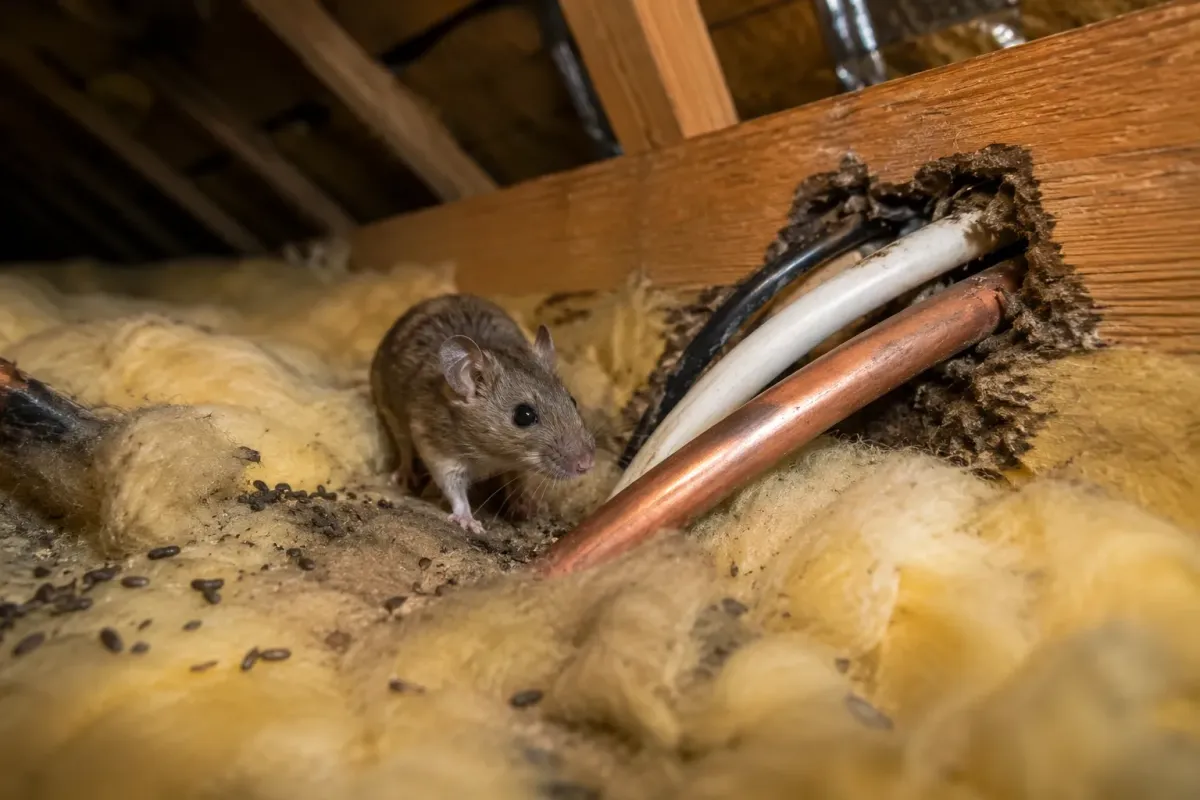
The most common entry points are around plumbing and electrical penetrations. These small gaps often go unnoticed during construction or develop over time as materials shift.
Once mice gain access through the garage area, they can easily move upward into the attic through hidden voids around wiring or pipe chases.
This is why simply sealing random exterior gaps often doesn’t solve the issue—you have to trace the real internal pathway.
The Damage Mice Cause in Attics
When mice settle into an attic, the damage can escalate quickly.
Two of the most common issues observed are:
Chewed electrical wiring, which can become a serious fire risk
Contaminated insulation caused by urine and droppings
Once insulation becomes contaminated, it not only creates odor problems but also reduces the efficiency of the home’s insulation system.
In many cases, homeowners don’t realize the extent of the damage until a full inspection is performed.
Our Step-by-Step Process for Mice in Attics
Every case is different, but the process stays consistent because skipping steps leads to recurring problems.
The typical approach includes:
Full inspection of attic and garage areas
Entry point identification to find how mice are getting in
Trapping and population control to reduce active activity
Exclusion and sealing to block access points
Sanitation to address contamination and odor
Follow-up to ensure the issue is fully resolved
The most important step is always the inspection and entry point discovery. Without that, everything else becomes temporary.
Common Mistakes Homeowners Make
Many homeowners try to handle mice in the attic on their own, but a few common mistakes lead to repeat infestations.
The biggest issues include:
Relying only on poison, which doesn’t solve entry problems
Sealing entry points too early before confirming all access routes
Ignoring a proper attic inspection
Using DIY traps without addressing the source
These approaches may reduce activity temporarily, but they rarely eliminate the root cause.
Real-World Experience: Why Problems Keep Coming Back
In multiple attic cases, homeowners reported hearing scratching noises at night and noticing odors but assumed it was a minor issue.
In one common pattern, inspection revealed that mice were entering through hidden gaps around plumbing and electrical lines in the garage ceiling area. Even after initial DIY attempts with traps and poison, activity continued because the entry point was never properly sealed.
Once the full entry path was identified and sealed, combined with trapping and sanitation, the issue was finally resolved.
This pattern is extremely common in attic infestations.
Professional Advice: DIY vs Calling a Pro
Based on real field experience, attic mouse problems are rarely solved with DIY methods alone.
The biggest reason is timing—by the time mice are audible or causing odor, they’ve usually already established nesting areas and multiple entry points.
DIY methods often focus on symptoms, not the source.
A professional inspection matters because:
It identifies hidden entry points
It confirms the full scope of the infestation
It prevents recurring issues after trapping
In most cases, early professional intervention actually reduces long-term damage and cost.
Final Thoughts
If you’re dealing with scratching noises, odors, or suspect mice in your attic, the worst thing you can do is ignore it or rely only on poison or traps.
In Cumming homes, the problem is almost always tied to hidden entry points—especially around plumbing and electrical pathways between the garage and attic.
A proper inspection and exclusion process is what ultimately solves it, not quick fixes.
