How Chamblee's Older Housing Stock Increases Termite Risk
How Chamblee's Older Housing Stock Increases Termite Risk
Chamblee's charm is part of what makes it a target. Established neighborhoods filled with post-war bungalows, mid-century ranch homes, and decades-old wood-frame construction give the city character — but that same age works against homeowners when it comes to termites. Unlike newer subdivisions where construction timing drives the risk, Chamblee's exposure comes from a different direction: original construction methods, treatment protections that quietly expired years ago, and a wave of renovation activity that disturbs soil across the city's older blocks.
If your home was built before the 2000s, here's what's actually working against you — and what to do about it.
Chamblee's Age Problem, Not Just a Georgia Problem
Every home built in Georgia sits on warm, humid soil that supports year-round termite activity — that part is true anywhere in the metro area. What sets older Chamblee homes apart is that any termite pretreatment applied during original construction has almost certainly outlived its effective window by now. Termite soil treatments and bait systems are designed to last a defined number of years, not indefinitely, and homes built decades ago were often treated once, at construction, with no ongoing renewal since. A protection plan that hasn't been maintained is functionally no protection at all.
Why Crawl Space Construction Raises the Stakes
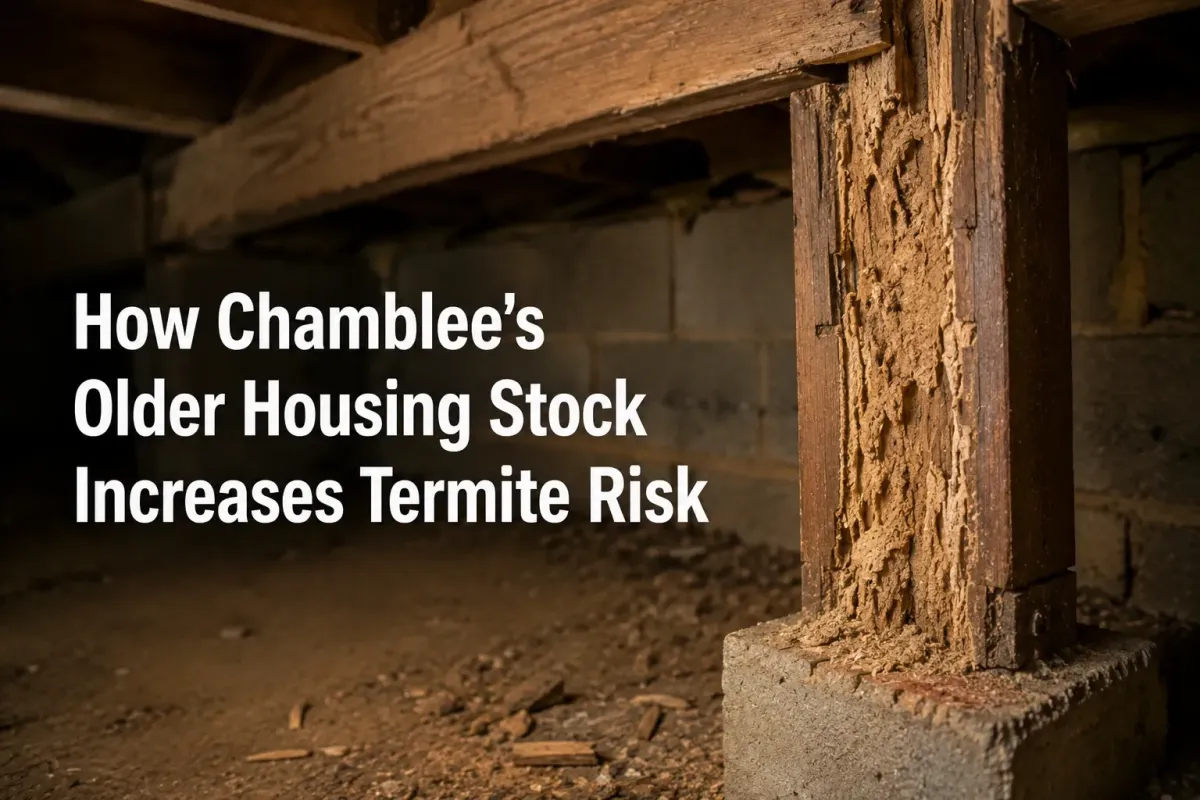
Many of Chamblee's older homes were built with crawl space foundations rather than the concrete slabs common in newer construction. Crawl spaces create direct wood-to-soil proximity in ways slab construction generally avoids, and they trap moisture more easily — both conditions termites are specifically drawn to. A poorly ventilated or damp crawl space essentially advertises itself to a nearby colony, and because it's a part of the home most homeowners rarely inspect, activity there can go unnoticed far longer than it would in a more visible part of the structure.
The Treatment Bond That Ran Out Years Ago
Here's a detail many homeowners don't realize until it's relevant: most termite treatments come with a renewable service bond or warranty, typically requiring annual inspection and renewal to stay active. If a previous owner let that bond lapse — or a home changed hands without anyone tracking it — the property may have gone years with zero active protection while everyone involved assumed it was covered. This is an especially common gap in older homes that have changed ownership multiple times, since bond history doesn't always transfer cleanly through a sale.
Renovation and Redevelopment Add Fuel to the Fire
Chamblee has seen a steady wave of renovation, teardown, and infill construction in recent years as older lots get updated or rebuilt. Every one of these projects disturbs soil — digging foundations, running new utility lines, regrading yards — and disturbed soil is exactly the kind of condition that pushes an established termite colony to search for a new, more convenient food source nearby. A home that sat undisturbed and untouched for twenty years can suddenly see new activity simply because construction two doors down broke up the ground and displaced a colony's existing foraging path.
Warning Signs Specific to Older Wood-Frame Homes
Older wood-frame construction shows termite activity a little differently than newer builds. Keep an eye out for:
Mud tubes along crawl space piers, foundation walls, or exterior brick veneer
Soft or spongy flooring, especially near exterior walls or bathrooms, which can indicate long-term moisture and feeding damage
Doors and windows that have started sticking, particularly in original wood-frame openings that have shifted slightly from structural feeding
Peeling or bubbling paint with no plumbing or roof leak to explain it
A hollow sound when tapping exposed wood trim, baseboards, or porch structural beams
Winged swarmers or discarded wings near windowsills or light fixtures, typically March through May
Because much of this activity happens in a crawl space or behind original wall finishes, a professional inspection — not a visual walkthrough — is the only reliable way to confirm what's actually going on.
What Buying (or Selling) an Older Chamblee Home Means for Termites
Termite inspections are a standard part of real estate transactions in Georgia, and for older Chamblee homes specifically, that inspection carries more weight than a formality. A wood-destroying-organism report (often called a termite letter or CL-100) documents current damage and active treatment status at the time of sale — but it's a snapshot, not a guarantee going forward. Buyers of an older home should confirm whether an active, transferable termite bond exists, and sellers benefit from addressing any lapsed protection before it becomes a negotiating point during closing.
FAQ SECTION
Q: Why are older homes in Chamblee more at risk for termites than newer construction? A: Termite pretreatment applied during original construction has a limited effective lifespan, and many older Chamblee homes haven't had that protection renewed in years, if ever. Combined with crawl space construction, which creates more direct wood-to-soil contact than slab foundations, older homes face compounding risk factors newer builds don't.
Q: What is a termite bond, and does my home still have one? A: A termite bond is a service agreement, typically requiring annual inspection and renewal, that keeps a property's termite protection active over time. If a bond lapses — often unnoticed through a change in ownership — the home may have no active protection even though a previous treatment was once applied. A pest control provider can check whether an active, transferable bond exists on your property.
Q: Does a crawl space really increase termite risk compared to a slab foundation? A: Yes. Crawl spaces create closer wood-to-soil proximity and trap moisture more easily than slab construction, both of which attract termites. Crawl spaces are also inspected far less often by homeowners, so activity there can go undetected longer.
Q: Can nearby construction or renovation cause termites to move into my home? A: Yes. Digging, regrading, and utility work disturb soil and can displace an established termite colony's foraging path, sometimes pushing activity toward a previously undisturbed home nearby. This is common in areas experiencing renovation or infill construction, including parts of Chamblee.
Q: Do I need a new termite inspection if I'm buying an older Chamblee home? A: Yes. A wood-destroying-organism report (termite letter) is standard for Georgia real estate transactions, but it reflects conditions at the time of inspection only. Confirming whether an active, transferable termite bond exists — separate from the inspection report itself — is worth doing before closing.
Not Sure Where Your Home Stands?
Older homes deserve an inspection that actually accounts for their age and construction — not a generic walkthrough. Max Pest Solutions offers free termite inspections for Chamblee homeowners, including a check on any existing bond status.
Have a pest problem? Call Max Pest Solutions at 404-424-9200.
