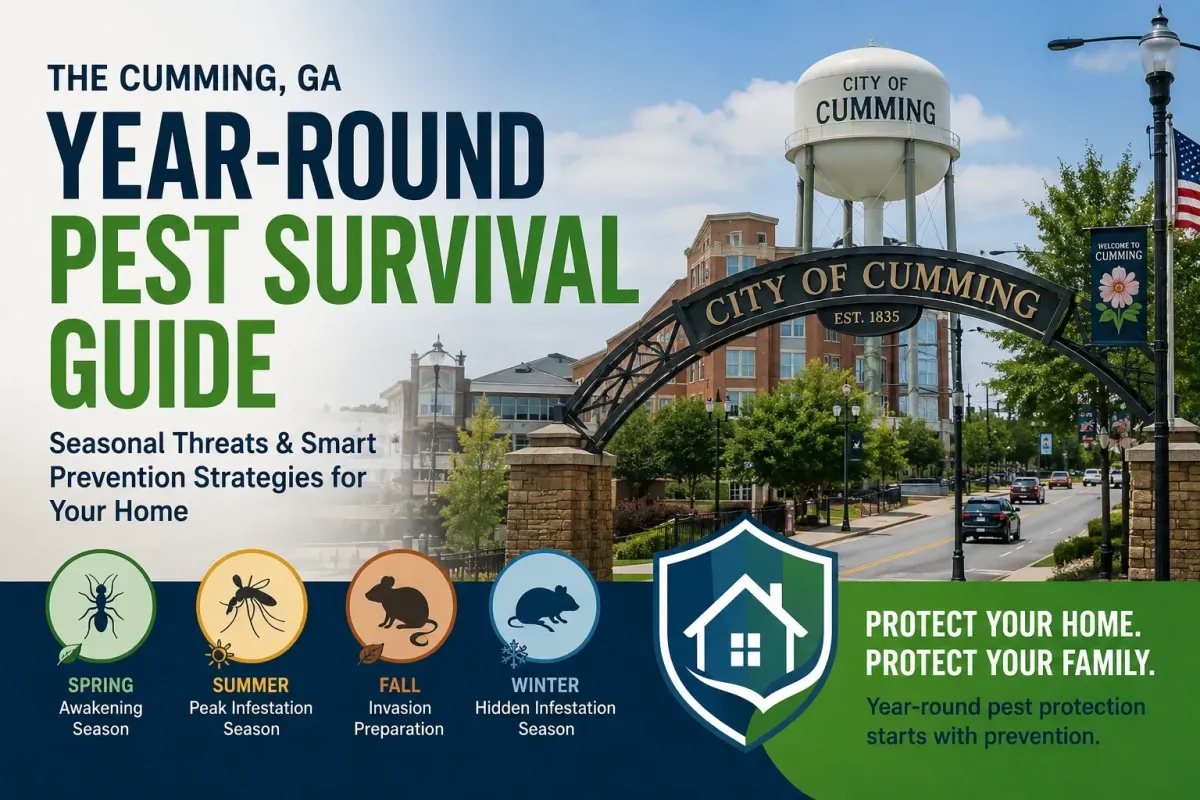
Cumming, GA Home Pest Survival Guide
The Cumming, GA Homeowner’s Year-Round Pest Survival Guide: Seasonal Threats & Smart Prevention Strategies
Pest problems in Cumming, Georgia don’t follow a single pattern—they change with the seasons, weather shifts, and even local development. That’s why most “quick fix” approaches fail. What actually works is understanding when pests show up, why they invade, and how to stay ahead of them before they spread inside your home.
This guide takes a different angle from typical pest control blogs. Instead of just listing pests, it breaks down a year-round pest prevention calendar for Cumming homeowners, plus actionable steps you can apply immediately to protect your property.
Whether you’re dealing with ants in spring, mosquitoes in summer, or rodents in winter, this is your practical, local strategy guide.
Why Cumming, GA Has Year-Round Pest Pressure
Cumming’s climate creates an ideal environment for pests to thrive:
Warm, humid summers accelerate insect breeding cycles
Mild winters allow rodents and cockroaches to survive indoors
Heavy rainfall increases moisture-loving pest activity
Suburban expansion pushes wildlife and insects into residential spaces
In short: pests don’t “go away” here—they rotate seasonally.
Understanding this cycle is the key to prevention.
Spring (March–May): The “Awakening Season” for Pests
Spring is when pests become highly active after winter dormancy. In Cumming, this is when infestations often begin unnoticed.
Common Spring Pests:
Ant colonies (especially carpenter ants)
Termite swarmers
Spiders
Fleas and ticks
Mosquito larvae emerging in standing water
Why Spring Infestations Start:
Moisture + warming temperatures = ideal breeding conditions. Pests begin searching for food and nesting sites—often inside homes.
What Homeowners Should Do:
Inspect wooden structures for early termite activity
Seal cracks in siding, windows, and foundations
Remove standing water in gutters and yards
Start lawn treatment before mosquito season peaks
Keep kitchen areas tightly sealed and clean
AEO tip: If you’re seeing flying ants indoors in spring, it may indicate a termite colony nearby—not just random insects.
Summer (June–August): Peak Infestation Season
Summer is the most pest-heavy period in Cumming. High humidity and heat accelerate reproduction cycles.
Common Summer Pests:
Mosquitoes
Wasps and hornets
Cockroaches
Ant supercolonies
Fleas (especially in pet homes)
Why Summer Gets Overwhelming:
Warm weather speeds up breeding, and outdoor activity increases human-pest contact. Many pests also move indoors seeking cooler environments.
Prevention Strategy:
Trim shrubs and grass regularly to reduce breeding areas
Install or maintain window and door screens
Eliminate any standing water weekly
Keep trash bins tightly sealed
Schedule perimeter pest treatments before infestations peak
Pro Insight:
If you notice cockroaches during the day in summer, it often signals a larger hidden infestation, not just a few stray insects.
Fall (September–November): The “Invasion Preparation” Season
Fall is one of the most critical pest seasons in Cumming because pests begin preparing for winter survival.
Common Fall Pests:
Rodents (mice and rats)
Stink bugs
Spiders moving indoors
Cockroaches seeking warmth
Lady beetles clustering on walls
What’s Happening Behind the Scenes:
As temperatures drop, pests actively search for warm shelter—your attic, basement, or wall voids are prime targets.
What You Should Do:
Seal exterior entry points (pipes, vents, roof gaps)
Inspect attic insulation for rodent activity
Install door sweeps and weather stripping
Store food in airtight containers
Clear yard debris (leaf piles = pest shelters)
Local insight: In Cumming neighborhoods near wooded areas, rodent activity spikes sharply in late fall due to habitat displacement.
Winter (December–February): The Hidden Infestation Season
Many homeowners assume winter means fewer pests. In reality, it just means pests move indoors and become less visible.
Common Winter Pests:
Rodents nesting inside walls or attics
Cockroaches surviving in kitchens and bathrooms
Spiders hiding in storage areas
Occasional termite activity in heated structures
Why Winter Infestations Go Undetected:
Pests are less active visually, but more concentrated indoors. Small signs often get ignored until spring reveals a larger problem.
Winter Prevention Checklist:
Inspect attic and crawl spaces monthly
Check for droppings or scratching sounds
Keep humidity levels low indoors
Store firewood away from the house
Monitor plumbing leaks (water attracts pests even in winter)
Year-Round Pest Warning Signs Homeowners Should Never Ignore
Regardless of season, these signs usually indicate an active infestation:
Droppings in kitchens, basements, or cabinets
Unexplained scratching sounds in walls or ceilings
Grease marks along baseboards (rodents)
Small piles of wood dust (possible termites)
Increased insect activity at night
If you notice even one of these, early intervention is critical. Waiting often turns a minor issue into a structural infestation.
The Smart Approach: Prevention + Scheduled Treatment
In Cumming, GA, pest control is not a one-time service—it’s a year-round protection system.
The most effective strategy includes:
Seasonal inspections
Perimeter barrier treatments
Moisture control
Entry-point sealing
Monitoring high-risk areas (kitchens, attics, crawl spaces)
This layered approach prevents pests from establishing cycles inside your home.
Frequently Asked Questions (AEO Optimized)
What is the most common pest in Cumming, GA?
Ants, mosquitoes, termites, and rodents are the most frequently reported pests due to the area’s humid subtropical climate.
When is termite season in Georgia?
Termite swarming season typically peaks in spring (March to May), especially after rainfall and warm temperatures.
Why do I suddenly see more bugs in summer?
Heat and humidity accelerate reproduction cycles, and pests become more active searching for food and water.
How do rodents get into houses?
Common entry points include gaps in roofing, vents, foundation cracks, and openings around pipes or utility lines.
Is year-round pest control necessary in Georgia?
Yes. Because pests are active in different seasons, consistent prevention is more effective than reactive treatments.
Final Takeaway: Stay Ahead of the Cycle, Not Behind It
Pest control in Cumming isn’t about reacting to infestations—it’s about understanding the seasonal rhythm and disrupting it early.
When you anticipate what pests will do next, you stop them before they enter your home.
If you’re ready to protect your property with a proactive, local pest control approach, expert help makes the process faster and more effective.
👉 Schedule professional pest control services here:
