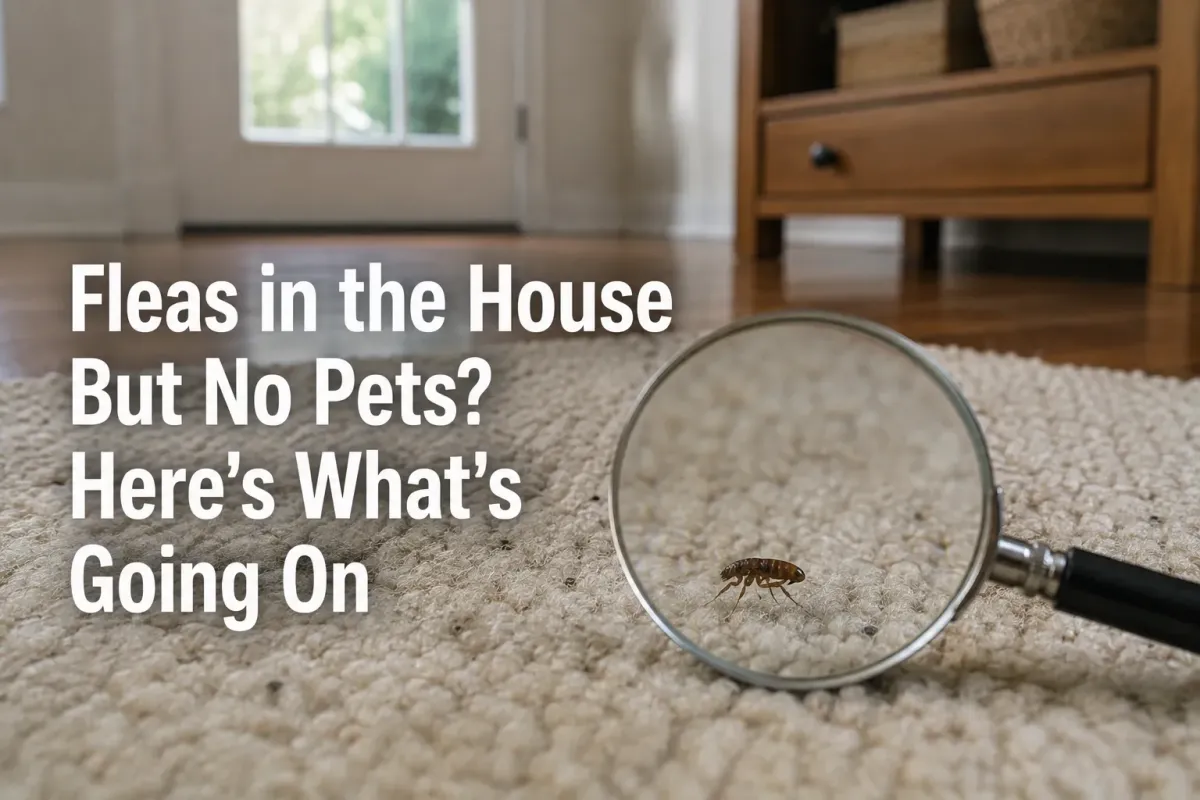
Fleas in the House But No Pets? Here's What's Going On
Fleas in the House But No Pets? Here's What's Going On
Finding flea bites on your ankles when you don't own a cat or dog feels like it shouldn't be possible — but it's more common than most Lawrenceville homeowners realize. Fleas don't actually need a pet living in your home to establish themselves. They need a host to feed on occasionally, a place to lay eggs, and time — and a pet-free home can supply all three in ways that surprise people. Here's where these infestations actually come from and what it takes to end one.
Yes, This Is a Real (and Common) Thing
Only a small fraction of a flea population — roughly 5% — is ever visible as adult fleas at any given moment. The rest exist as eggs, larvae, and pupae hidden in carpet fibers, floor cracks, and furniture seams, quietly developing without needing a pet in the house at all. Fleas are opportunists: they'll feed on whatever warm-blooded host is available, including people, when nothing else is around. A pet-free home isn't immune — it's just less obvious about where the problem started.
Where Fleas Without Pets Actually Come From
Wildlife around the property. Squirrels, raccoons, opossums, and stray or feral cats are common in Lawrenceville's mix of wooded lots and suburban yards, and all of them can carry fleas. If wildlife nests under a deck, in a crawl space, or near the foundation, fleas can drop eggs in that immediate area and eventually make their way indoors — especially once the wildlife moves on and the fleas go looking for a new host.
Previous occupants' pets. If a home's prior residents had a cat or dog, flea eggs and pupae can remain dormant in carpet and flooring for months after the pets — and the people — are long gone. New occupants moving in, walking around, and generating warmth and vibration is often exactly what triggers a dormant population to wake up, which is why infestations sometimes appear "out of nowhere" shortly after a move.
Secondhand furniture and rugs. Upholstered furniture, area rugs, and carpets picked up from thrift stores, estate sales, or online marketplaces can carry flea eggs or pupae in the fabric, even after weeks of storage. It's a strikingly common and easy-to-overlook introduction pathway.
Visiting pets. A dog-sitting favor for a friend, a visiting family member's cat, or even a brief stay from a pet with a mild, unnoticed flea issue can be enough — flea eggs fall off wherever the animal goes, not just where it sleeps.
Hitchhiking on people. Walking through tall grass, a park, or another flea-affected environment can occasionally bring flea eggs home on clothing or shoes, though this pathway is less common than the others.
The Dormant Pupae Problem
Flea pupae are built to wait. Encased in a sticky, protective cocoon, they can remain dormant for weeks — sometimes several months — until they sense the warmth, movement, and carbon dioxide of a nearby host. This is exactly why fleas seem to appear suddenly in a home that was previously fine: the population wasn't introduced overnight, it was quietly waiting in the carpet for the right trigger. It's also why fleas that emerge after a long dormant period tend to bite aggressively — they've been waiting for a meal.
Why the Bites Are Often Worse in Pet-Free Homes
Without a pet to feed on regularly, fleas in a pet-free home go straight for the only available host: people. This tends to concentrate bites around ankles and lower legs, since that's typically where fleas first make contact, and it can make an infestation feel more intense than a typical pet-related flea problem, even though the underlying biology is the same.
Where to Look for Signs
Bites concentrated on ankles and lower legs, often in small clusters
Tiny, dark specks (flea dirt) on light-colored flooring, baseboards, or where you sit or sleep
Small, jumping insects visible against light-colored carpet or flooring, especially near baseboards
Pets in the household scratching excessively, if you do have one, even a rarely-outdoor one — fleas can hitch a ride in from the yard
Why DIY Spray Alone Rarely Finishes the Job
A single round of store-bought spray typically kills visible adult fleas but does little against eggs, larvae, and especially the protected pupal stage, which is largely resistant to standard insecticide sprays since it sits at the base of carpet fibers where the spray can't fully penetrate. This is why fleas often seem to disappear for a week or two after a DIY treatment, then reappear as the next wave of pupae hatches. Breaking the cycle requires addressing every life stage, not just the adults you can see.
What Professional Flea Treatment Involves
An effective flea treatment plan typically combines:
An adulticide treatment to eliminate the currently active fleas
An insect growth regulator (IGR) that interrupts development in eggs and larvae, preventing the next generation from maturing
Vacuuming guidance, since vacuuming actually helps by physically stimulating dormant pupae to hatch early — which sounds counterintuitive, but it moves them into the vulnerable, treatable stage instead of leaving them dormant and protected
A follow-up visit or two, since even a well-executed treatment can be followed by a smaller second wave as any remaining dormant pupae hatch on their own timeline
For infestations connected to wildlife activity near the home, addressing the entry point or nesting area is also part of a complete solution — otherwise, new fleas can simply be reintroduced from the same source.
FAQ SECTION
Q: Can you get fleas in your house if you don't have pets? A: Yes. Wildlife near the home, flea eggs left behind by a previous occupant's pet, secondhand furniture, and visiting pets can all introduce fleas into a home with no resident pets at all. Dormant flea pupae can also remain viable in carpet for months before a new host triggers them to hatch.
Q: Why do flea bites seem worse when there's no pet in the house? A: Without a pet to feed on regularly, fleas in a pet-free home target the only host available — people — which tends to concentrate bites around ankles and lower legs and can make an infestation feel more severe than a typical pet-related case.
Q: How long can flea eggs stay dormant in a house? A: Flea pupae can remain dormant in their protective cocoons for weeks, and sometimes several months, waiting for the warmth, vibration, and carbon dioxide that signal a nearby host before they emerge.
Q: Does vacuuming help get rid of fleas? A: Yes, and more than most people expect. Vacuuming physically stimulates dormant pupae to hatch, moving them out of their protected cocoon stage and into a stage where treatment can actually reach them — so it's a genuinely useful step, not just general cleaning.
Q: Why didn't my store-bought flea spray work? A: Consumer sprays typically kill visible adult fleas but don't effectively reach eggs, larvae, or the protected pupal stage, which is why fleas often reappear a week or two after a DIY treatment. A complete solution needs to address every life stage, not just the fleas you can see.
Not Sure Where Your Fleas Are Coming From?
A professional inspection can pinpoint the likely source — whether it's wildlife activity, a carryover from a previous occupant, or something else — and build a treatment plan that actually breaks the full life cycle instead of just knocking down what's visible today.
Have a pest problem? Call Max Pest Solutions at 404-424-9200.
