Heat Treatment vs. Chemical Treatment for Bed Bugs
Heat Treatment vs. Chemical Treatment for Bed Bugs: Which Is Right for Your Cumming Home?
Once a Cumming homeowner confirms bed bugs, the next question is almost always the same: heat or chemical? Both methods eliminate bed bugs completely when applied correctly, but they get there in very different ways — different timelines, different costs, different prep requirements, and different scenarios where one clearly outperforms the other. Here's an honest breakdown of both, so you can walk into that first phone call already understanding your options instead of learning them on the spot.
The Short Answer
Heat treatment eliminates an infestation in a single day, at every life stage including eggs, and costs more upfront. Chemical treatment works over several visits across 4–6 weeks, costs less initially, and is often the more practical choice for larger homes or budget-conscious situations. Neither is universally "better" — the right choice depends on your timeline, your home's layout, and the extent of the infestation, which is exactly why a professional inspection should come before either treatment is booked.
How Heat Treatment Works
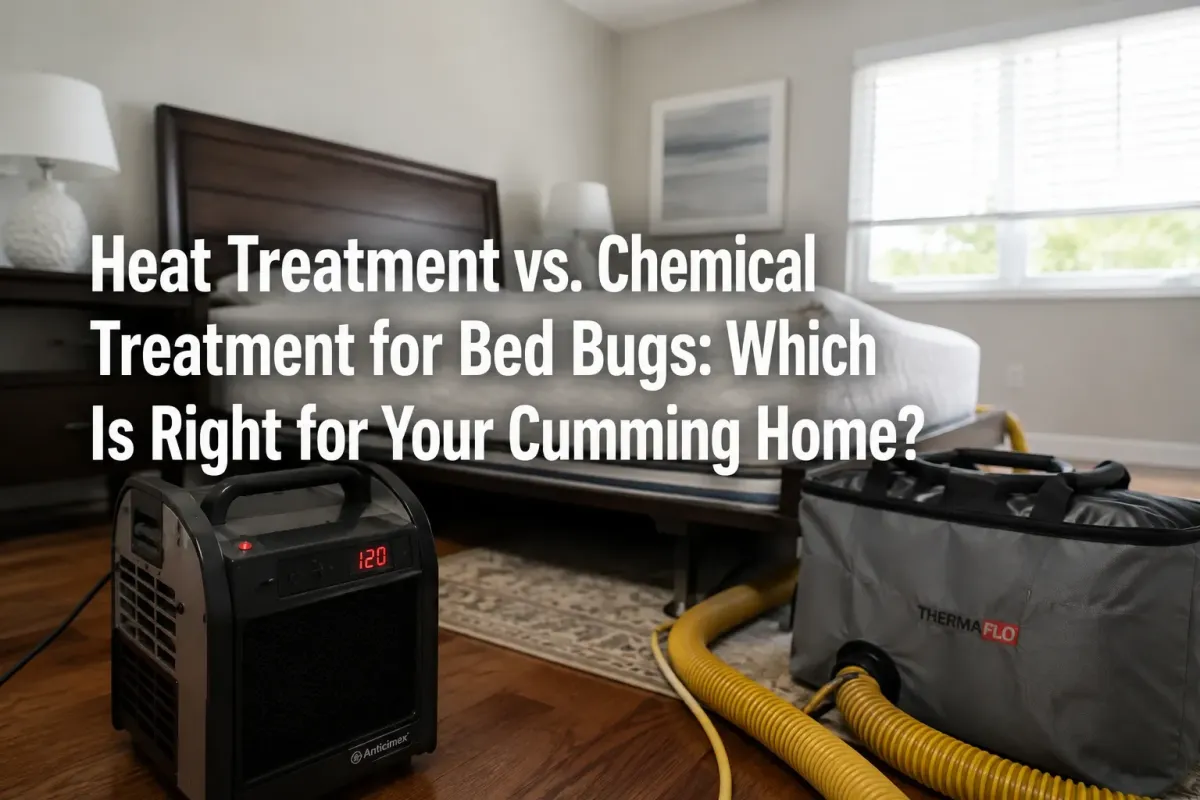
Specialized equipment raises an entire room — or the whole home — to a sustained temperature between 118°F and 135°F for several hours. Bed bugs and their eggs die at 113°F within about 90 minutes, so the sustained heat used in professional treatment reaches well past the lethal threshold with margin to spare. Because heat penetrates mattresses, furniture joints, wall voids, baseboards, and carpeting simultaneously, it kills the entire population — including eggs that chemical treatment often needs a second visit to catch — in one treatment day.
Trade-offs: Heat treatment costs more per visit than a single chemical application, requires removing heat-sensitive items (aerosol cans, certain electronics, candles, medications, musical instruments) before treatment, and requires the home to be vacated for several hours during the process. For homeowners who need the fastest possible resolution — before a move, a guest visit, or simply to stop losing sleep — it's usually worth the premium.
How Chemical Treatment Works
A series of two to three professional applications, spaced 10 to 14 days apart, targets adult bed bugs on contact and interrupts new nymphs as previously unreached eggs hatch between visits. EPA-registered products are applied to harborage sites identified during inspection, and the multi-visit structure exists specifically because a single chemical application can't kill eggs — subsequent visits are what catch the next generation as it emerges.
Trade-offs: Chemical treatment is generally more cost-accessible than heat, especially for larger homes, and doesn't require the same heat-sensitive-item removal process. The downside is timeline: full elimination takes 4–6 weeks rather than a single day, and it requires more homeowner involvement between visits — laundering bedding, vacuuming, and temporarily relocating furniture in treated areas as instructed.
Side-by-Side Comparison
FactorHeat TreatmentChemical TreatmentTime to full eliminationSingle treatment day4–6 weeks, 2–3 visitsKills eggs on contactYes, immediatelyNo — requires follow-up visits as eggs hatchTypical costHigher upfrontLower upfront, spread across visitsPrep requiredRemove heat-sensitive items; vacate home for hoursLaunder, vacuum, relocate furniture between visitsBest forFast resolution, single rooms, urgent timelinesLarger homes, budget flexibility, early-stage infestationsResidual protectionNone (no chemical residue left behind)Some residual protection between visits
Which One Fits Your Situation?
You need the fastest possible resolution. If you're selling your home, hosting guests soon, or simply can't tolerate more sleepless nights, heat treatment's single-day elimination is the clear advantage — even at a higher upfront cost.
You're treating a larger home on a tighter budget. Chemical treatment's lower initial cost and per-visit structure often make it the more practical choice for larger properties, especially when the infestation is confirmed early and hasn't spread extensively.
You have young children, pets with sensitivities, or prefer no chemical residue. Heat treatment leaves no chemical residue behind, which some households specifically prefer regardless of cost or timeline.
You live in a townhome or condo with shared walls. This is where the extent of the infestation matters most. A confirmed multi-room spread, or any concern about migration from an adjacent unit through shared wall voids, generally calls for the combined approach below rather than either method alone.
Can You Combine Both?
Yes — and for severe, multi-room infestations or attached housing with adjacent-unit risk, combining both is often the strongest option available. Heat treatment delivers the immediate, comprehensive kill across every life stage, while a follow-up chemical application to perimeter areas provides ongoing residual protection against any re-introduction — particularly relevant in Cumming's growing townhome and condominium communities, where a neighboring unit's infestation can be an ongoing reintroduction risk even after your own unit is fully treated.
Why DIY Products Aren't a Third Option
It's worth addressing directly: store-bought sprays and foggers aren't a lower-cost alternative to either professional method — they're a different category of problem. Foggers disperse chemical into open air, which isn't where bed bugs live; the bugs hide in seams, wall voids, and behind outlet plates that fogger chemical never reaches. What it does reach is enough to repel bed bugs from their current hiding spot, scattering them into new rooms and new harborage sites. Repeated exposure to the same consumer chemical class also builds resistance in the surviving population, which can make the eventual professional treatment more difficult than if no DIY attempt had been made at all.
What a Proper Inspection Actually Determines
Neither treatment should be selected before a room-by-room inspection confirms the extent of the infestation — how many rooms are affected, how established the population is, and whether there's any indication of adjacent-unit involvement in attached housing. That inspection is what turns "heat or chemical?" from a guess into an informed decision specific to your home, rather than a one-size-fits-all recommendation.
FAQ SECTION
Q: Is heat treatment more effective than chemical treatment for bed bugs? A: Both are fully effective when applied correctly. Heat treatment kills all life stages, including eggs, in a single visit, while chemical treatment requires 2–3 visits over several weeks to catch newly hatched eggs the first application couldn't reach. Effectiveness is comparable by the end of treatment — the real difference is timeline and cost.
Q: How much does bed bug heat treatment cost compared to chemical treatment? A: Heat treatment typically costs more upfront since it requires specialized equipment and eliminates the infestation in a single visit. Chemical treatment usually costs less initially but is spread across 2–3 visits. A professional inspection provides written, home-specific pricing for both options before you commit to either.
Q: How long does bed bug heat treatment take? A: Heat treatment is typically completed in a single day. The room or home is heated to 118–135°F and held there for several hours, which is enough to kill bed bugs and eggs throughout the treated space.
Q: Can I combine heat and chemical treatment? A: Yes. For severe, multi-room infestations, or attached housing where adjacent-unit migration is a concern, combining heat treatment's immediate comprehensive kill with chemical treatment's residual protection is often the most effective approach.
Q: Why do store-bought bed bug sprays and foggers make things worse? A: They disperse chemical into open air rather than the seams, wall voids, and hiding spots where bed bugs actually live. This typically repels bed bugs into new hiding locations rather than killing them, spreading the infestation to additional rooms and building chemical resistance in the surviving population.
Ready to Find Out What Your Home Needs?
A professional inspection tells you exactly what you're dealing with — and which treatment actually fits your home, timeline, and budget — before you spend a dollar on either option.
Have a pest problem? Call Max Pest Solutions at 404-424-9200.
