Mice or Rats? What's Scratching in Your Cumming Attic This Fall
Mice or Rats? What's Scratching in Your Cumming Attic This Fall
That scratching sound overhead, right around dusk or in the dead of night, has a way of triggering the same question for every homeowner: what exactly is up there? Whether it's a mouse or a rat changes more than just the mental image — it changes the traps, the bait, the entry points to check, and how urgently you should act. Fall is when this question comes up most, and there's a reliable way to answer it without ever laying eyes on the culprit.
Why Fall Triggers the Attic Invasion
As outdoor temperatures drop, rodents that spent the warmer months foraging outside actively seek warm, sheltered spaces to spend the winter — and an attic checks every box: insulation for warmth, elevation away from ground predators, and easy access through roof lines, soffit gaps, and overhanging tree branches. Cumming's mix of wooded lots and mature trees close to rooflines makes this transition especially easy for rodents already living nearby. This is exactly why so many "I've never had this problem before" calls come in during October and November.
Sound Test: What You're Hearing at Night
Before looking for physical evidence, the sound itself is a genuinely useful first clue.
Light, quick scratching or scurrying, especially around dusk tends to point to mice, which are most active at dawn and dusk rather than deep into the night.
Heavier scampering, thumping, or gnawing sounds, particularly in the middle of the night, point toward rats, which are larger, heavier, and more strictly nocturnal.
Activity that continues during daylight hours often suggests a larger, well-established population rather than just one or two individuals — worth noting regardless of species, since it changes the urgency.
Size and Appearance
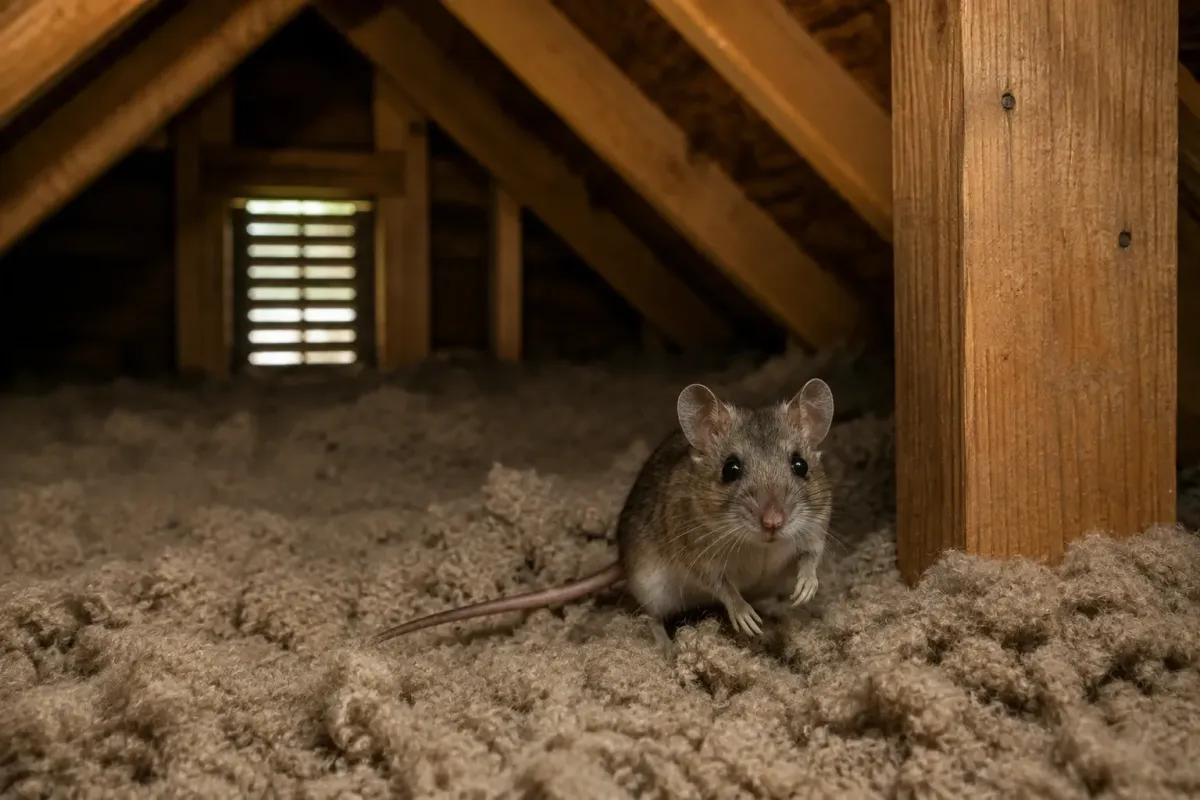
If you do catch a glimpse, a few features settle it quickly. Mice are small — typically three to four inches of body length, with a thin, proportionally long tail, a pointed nose, and noticeably large ears relative to their head. Rats are considerably larger and heavier, with a blunter nose, smaller ears relative to their head, and a thicker tail.
Droppings: The Most Reliable Clue
When you can't see or hear the source directly, droppings are usually the clearest indicator, since they're often the first thing homeowners actually notice.
Mouse droppings are small, about ⅛ to ¼ inch, with pointed ends, resembling a dark grain of rice, and typically found scattered along frequently traveled paths and near food sources.
Rat droppings are noticeably larger, often over ¼ to ½ inch, thicker, and more capsule- or spindle-shaped, and tend to be concentrated in hidden corners of the attic or basement near the nest itself rather than scattered widely.
Nesting Materials and Location
Both species build nests from shredded paper, insulation, fabric, and similar soft materials, but the scale and placement differ. Mice build smaller, ball-shaped nests and often maintain several of them throughout a structure, typically tucked close to a food source — behind appliances, inside stored boxes, in wall voids near the kitchen. Rats build larger, more substantial nests, generally fewer in number, and often located higher up in attics or rafters where they feel more secure.
Georgia's Attic Regular: The Roof Rat
If it is a rat, there's a good chance it's specifically a roof rat rather than the ground-dwelling Norway rat more commonly pictured. Roof rats are excellent climbers, genuinely earning their name by favoring elevated spaces — attics, rafters, and the tops of cabinets — over burrows near the foundation. In Cumming and similar parts of North Georgia, roof rats commonly access homes via tree branches that overhang or touch the roofline, which is why homes with mature trees close to the house see this specific rodent more often than homes in newer, more open developments.
Why the Identification Changes Your Approach
This isn't just a curiosity question — getting it wrong sends control efforts in the wrong direction entirely. Mouse traps and bait stations are sized and positioned differently than rat equipment, and each species requires different sealing priorities for entry points: mice can squeeze through gaps as small as a quarter-inch, roughly the width of a pencil, while rats need a somewhat larger opening but can still access surprisingly small gaps by gnawing them wider. A rat-focused plan applied to a mouse problem, or vice versa, often means continued activity even after treatment — which is why professional identification matters more than most homeowners initially assume.
Entry Points to Check Before It's Too Cold to Fix Them
Roofline and soffit gaps, especially where tree branches overhang or contact the roof
Gaps around utility penetrations — where pipes, cables, or vents pass through exterior walls
Foundation vents and crawl space openings, particularly for ground-level rodent activity
Gaps under doors and around window frames, which are easy to overlook but simple to seal
Chimney caps, an often-missed entry point for both mice and rats
Fall is the ideal window to address these, since sealing entry points before winter prevents the population already moving indoors from establishing further, rather than trying to evict an established nest mid-winter.
FAQ SECTION
Q: How can I tell if it's mice or rats in my Cumming attic? A: Listen first — light, quick scratching around dusk usually points to mice, while heavier thumping and gnawing late at night points to rats. Droppings confirm it: mouse droppings are small (⅛–¼ inch) with pointed ends, while rat droppings are noticeably larger and thicker, often over ¼ inch.
Q: Why do I suddenly have rodents in my attic in the fall when I never did before? A: As outdoor temperatures drop, rodents that were foraging outside during warmer months actively seek warm, sheltered spaces for winter. Attics offer insulation, elevation, and easy access, especially in homes near mature trees — making fall the most common time for a first-time rodent problem to appear.
Q: What is a roof rat, and why does it matter in Georgia? A: Roof rats are a climbing species common throughout the Southeast, including North Georgia, that favor elevated nesting spots like attics and rafters over ground-level burrows. They commonly access homes via tree branches touching or overhanging the roofline, which is especially relevant for homes on wooded lots.
Q: Does it matter whether I have mice or rats for how I treat the problem? A: Yes, significantly. Traps, bait stations, and entry-point sealing priorities differ by species and size. Treating a rat infestation with mouse-sized equipment, or the reverse, often leaves the problem only partially addressed.
Q: How small of a gap can rodents actually get through? A: Mice can squeeze through openings as small as a quarter-inch — roughly the width of a pencil. Rats need a somewhat larger gap to start, but can gnaw an existing small opening wider over time, so even minor gaps are worth sealing before they become entry points.
Hearing Something You Can't Identify?
A professional inspection can confirm exactly what's in your attic and where it's getting in, before a small problem turns into an established winter population.
Have a pest problem? Call Max Pest Solutions at 404-424-9200.
