
7 Unmistakable Signs of Bed Bugs in Your Alpharetta Home (And What to Do)

Key Takeaways
- Rust-colored stains on bedding and tiny dark spots in mattress seams are among the earliest and most reliable signs of a bed bug infestation.
- Bed bug bites alone are not a reliable confirmation because up to 30% of people show no visible skin reaction, according to the CDC.
- A female bed bug can lay up to five eggs per day, meaning a small infestation can grow rapidly if not caught and treated early.
- Over-the-counter sprays rarely eliminate bed bugs because many populations have developed resistance to common retail pesticides like pyrethroids.
- Professional heat treatment, steam, and EPA-registered chemical applications are significantly more effective than DIY methods for eliminating bed bugs at all life stages.
- Alpharetta homeowners should document evidence, avoid moving infested furniture, and contact a licensed pest control company as soon as multiple signs are identified.
Table of Contents
- Why Alpharetta Homeowners Should Take Bed Bugs Seriously
- Sign 1: Small, Rust-Colored Stains on Bedding or Mattresses
- Sign 2: Tiny White Eggs and Shed Skins
- Sign 3: Live Bed Bugs
- Sign 4: Bites on Your Skin
- Sign 5: A Musty, Sweet Odor
- Sign 6: Blood Smears on Walls or Furniture
- Sign 7: Dark Spots in Mattress Seams or Furniture Joints
- What to Do After Spotting These Signs
- Frequently Asked Questions
Bed bugs leave behind a clear trail of evidence long before most homeowners realize they have an infestation. In Alpharetta, GA, the combination of a warm climate, frequent travel through Hartsfield-Jackson Atlanta International Airport, and high-density residential communities creates ideal conditions for bed bugs to spread. Knowing the specific signs to look for can mean the difference between catching a small problem early and dealing with a full-blown infestation.
Why Alpharetta Homeowners Should Take Bed Bugs Seriously
Alpharetta sits in North Fulton County, one of the most active real estate and hospitality markets in metro Atlanta. Residents commute, travel, and host guests frequently. Bed bugs travel on luggage, clothing, used furniture, and even library books. Once they enter a home, they multiply fast - a single female can lay up to five eggs per day under ideal conditions, according to the U.S. Centers for Disease Control and Prevention (CDC).
Unlike many pests, bed bugs do not indicate poor housekeeping. They infest luxury hotels, clean apartments, and well-maintained single-family homes with equal ease. The earlier you identify them, the easier and less expensive treatment becomes.
For pest control in Alpharetta specifically, local professionals understand the housing stock in subdivisions like Webb Bridge, Windward, and Alpharetta Commons where bed bugs have been reported in multi-unit buildings and townhome communities.
Sign 1: Small, Rust-Colored Stains on Bedding or Mattresses
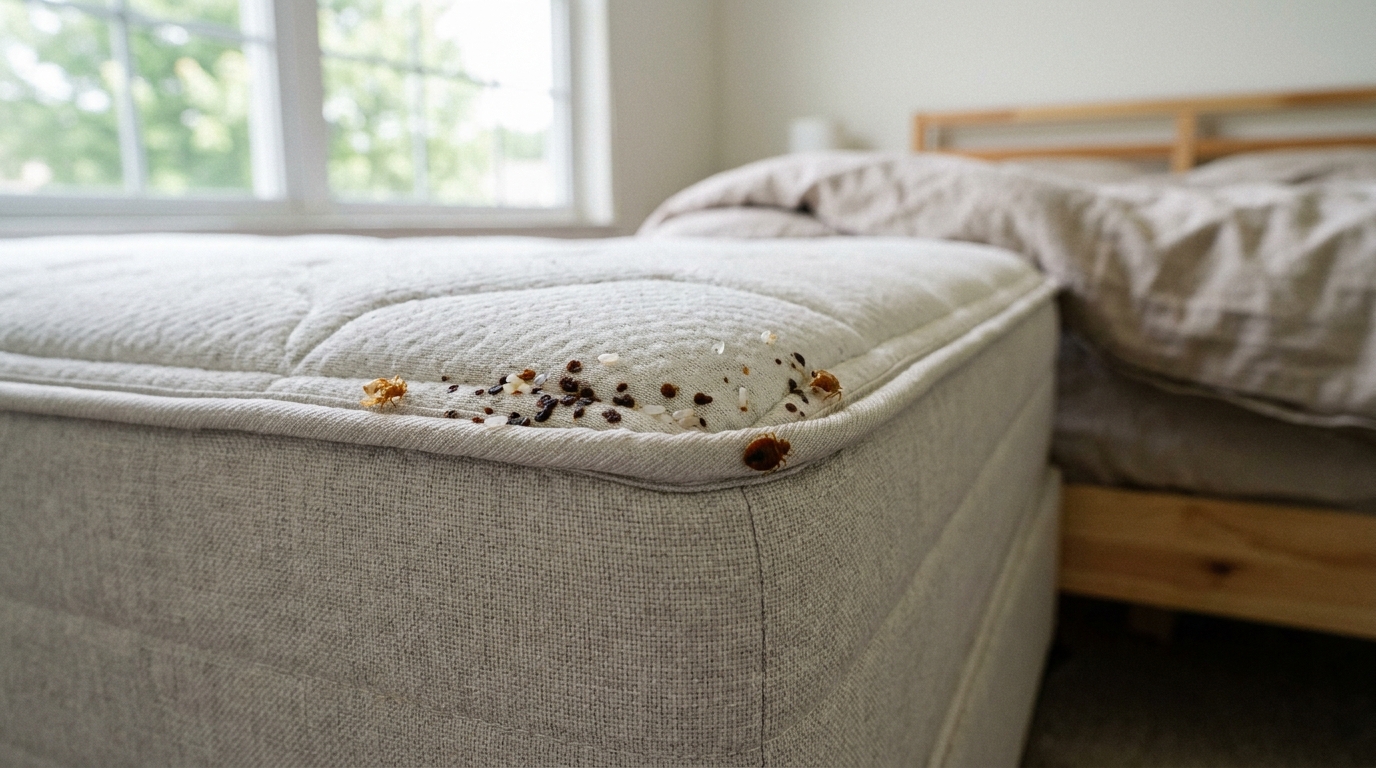
One of the earliest and most reliable signs of a bed bug presence is the appearance of small brownish-red or rust-colored spots on sheets, pillowcases, or the mattress surface itself. These stains are caused by two things: bed bugs being crushed while a person rolls over in their sleep, and the digested blood they excrete after feeding.
The spots are typically smaller than a pencil eraser and may smear if touched while still wet. They appear most often near the seams of mattresses, along the edges of box springs, and on flat sheets close to where a person sleeps.
How to Test the Stains
If you are unsure whether a stain is from a bed bug or another source, place a drop of water on the spot. Bed bug fecal stains tend to bleed outward in a circular pattern because they contain digested blood. This simple test is not definitive, but it can help narrow things down before calling a professional.
Sign 2: Tiny White Eggs and Shed Skins
Bed bug eggs are pearl-white, about 1 mm long, and are often found in clusters in tight crevices. They are sticky when first laid, which helps them adhere to surfaces. Shed skins, also called exuviae, are translucent husks left behind as nymphs molt through five growth stages before reaching adulthood.
Both eggs and shed skins are most commonly found:
- Along mattress seams and piping
- Inside box spring corners
- Behind headboards
- Inside electrical outlet covers
- Along the edges of carpeting near bed frames
Finding multiple shed skins in a concentrated area is a strong indicator that bed bugs have been living and reproducing in that spot for some time.
Sign 3: Live Bed Bugs
Adult bed bugs are visible to the naked eye. They are oval-shaped, flat when unfed, and about the size of an apple seed (roughly 4-5 mm long). After feeding, their bodies swell and turn a brighter reddish-brown. Nymphs, the younger stages, are smaller and paler, sometimes nearly translucent.
Bed bugs are nocturnal. They hide during the day and emerge at night to feed, typically in the hour before dawn. If you inspect bedding, furniture seams, or baseboards in the dark with a flashlight, you are more likely to catch them active.
Where to Look in an Alpharetta Home
Alpharetta homes often include thick-pile carpeting, upholstered headboards, and heavy window treatments - all of which provide excellent hiding spots. Check these areas carefully:
- The underside of box springs
- Drawer joints in nightstands
- The junction where the wall meets the floor
- Behind picture frames hanging near the bed
- Inside the seams of upholstered chairs or sofas in the bedroom
Sign 4: Bites on Your Skin
Bed bug bites are a common clue, but they are not a reliable standalone indicator because reactions vary significantly from person to person. Some people develop red, itchy welts within hours. Others show no visible reaction at all. The CDC notes that up to 30% of people show no skin reaction to bed bug bites.
That said, a recognizable bite pattern does exist. Bed bug bites often appear in a line or cluster of three to five bites, sometimes called the “breakfast, lunch, and dinner” pattern. They typically appear on exposed skin: the arms, neck, shoulders, and ankles.
Bites alone should not be used to confirm a bed bug infestation. Bites that might look like bed bug marks can also be caused by mosquitoes, fleas, or allergic reactions. Always look for multiple types of evidence before drawing conclusions.
Sign 5: A Musty, Sweet Odor
Large bed bug infestations produce a distinctive odor that has been described as musty, sweet, or similar to overripe raspberries. This scent comes from pheromones the bugs release. It is most noticeable in enclosed spaces like closets, under beds, or in rooms with poor ventilation.
If you walk into a bedroom and notice an unexplained musty smell that does not go away after laundering bedding or cleaning the room, that is worth investigating further. This sign alone is not enough to confirm bed bugs, but combined with other signs on this list, it strengthens the case significantly.
Sign 6: Blood Smears on Walls or Furniture
When bed bugs feed and then crawl back to their hiding spots, they sometimes leave tiny blood smears along the path they travel. These can appear as thin reddish streaks or dots on walls, baseboards, or the sides of furniture.
This sign is more common in heavier infestations. If you are seeing blood smears on walls in addition to stained bedding and bite marks, the infestation has likely been present for several weeks or longer. At that stage, professional treatment is almost always necessary.
Max Pest Solutions, located at 6535 Shiloh Rd #600, Alpharetta, GA 30005, handles infestations at all stages. Early-stage infestations may be treated differently than established ones, which is another reason prompt action matters.
Sign 7: Dark Spots in Mattress Seams or Furniture Joints
Dark, ink-like spots in seams, joints, and crevices are bed bug fecal matter. Unlike the rust-colored blood stains that appear on flat fabric surfaces, these spots tend to appear in clusters and have a darker, almost black color. They are often found alongside shed skins and eggs in the same hiding areas.
Using a magnifying glass and a flashlight, inspect the following with care:
- All four corners of a mattress
- The wooden slats of a bed frame
- The underside of upholstered furniture
- Behind baseboards and along carpet edges
- The interior corners of closets near the floor
What to Do After Spotting These Signs
Finding any combination of the above signs calls for an immediate, methodical response.
Step 1: Document What You Find
Take photos of any stains, eggs, shed skins, or live bugs you find. Note the locations. This documentation helps a pest control professional understand the scope of the infestation before they arrive and allows them to plan treatment more accurately.
Step 2: Reduce the Spread
Do not move infested mattresses or furniture to other rooms. That action is one of the most common ways bed bugs spread within a home. Instead, encase the mattress and box spring in bed bug-proof encasements, which are available at most home improvement stores.
Wash all bedding, clothing, and linens in hot water (at least 120 degrees Fahrenheit) and dry them on the highest heat setting for at least 30 minutes. High heat kills bed bugs at all life stages.
Step 3: Call a Licensed Pest Control Professional
Over-the-counter sprays and home remedies rarely eliminate bed bug infestations. Bed bugs have developed resistance to many common pesticides, including pyrethroids, which are the active ingredient in most retail sprays. A licensed pest control company has access to professional-grade treatments including heat treatment, steam treatment, and EPA-registered chemical applications that reach hiding spots consumer products cannot.
For residential pest control services in the Alpharetta area, Max Pest Solutions can be reached at +1404-424-9200 or through their website at https://www.maxpestsolutions.com.
Step 4: Prepare for the Treatment Visit
A pest control technician will typically ask homeowners to:
- Clear clutter from around the bed and bedroom furniture
- Wash and bag all clothing and bedding before treatment
- Vacuum the mattress, bed frame, and surrounding floor
- Move furniture away from walls slightly to allow access
Following the preparation instructions precisely improves treatment effectiveness significantly.
Step 5: Follow Up
Bed bug treatments often require more than one visit, especially in cases involving multiple rooms or heavy infestations. Ask the pest control company about their follow-up protocol and what signs to watch for between treatments.
Frequently Asked Questions
How do I know for certain that I have bed bugs and not another pest?
The most reliable way to confirm a bed bug infestation is to find a live bed bug, an egg, or shed skin and have it identified by a licensed pest control professional. Signs like bites and stains can be caused by other insects. A professional inspection, often offered at low or no cost by local companies, can confirm or rule out bed bugs definitively.
Can bed bugs live in places other than the bedroom?
Yes. While bedrooms are the most common location because bed bugs feed on sleeping humans, they can also establish themselves in living room sofas, recliners, office chairs, and even behind wall outlets throughout a home. In multi-unit buildings, they can travel through wall voids between units. If you suspect an infestation, inspect all upholstered furniture and wall junctions in your home, not just the bedroom.
How quickly can a bed bug infestation grow?
Under typical indoor temperatures in Alpharetta, which remain relatively warm year-round, a bed bug population can double in size roughly every 16 days. A few bugs brought home from a hotel stay can become hundreds within two to three months. This is why early detection using the signs above is so important.
Are DIY treatments effective against bed bugs?
Most DIY treatments provide limited, temporary results at best. Aerosol sprays from hardware stores may kill bed bugs on contact but do not penetrate the crevices where bugs hide or destroy eggs. Heat treatment - raising room temperature to 118 degrees Fahrenheit or higher for a sustained period - is one of the most effective methods and is typically only achievable with professional equipment. Licensed pest control companies also apply residual products that continue working after the initial treatment.
Does Max Pest Solutions serve areas near Alpharetta?
Yes. Max Pest Solutions serves multiple communities throughout the metro Atlanta area, including Johns Creek, Cumming, and surrounding cities. Homeowners in these areas can contact the company at +1404-424-9200 or visit https://www.maxpestsolutions.com to schedule an inspection.