
5 Signs of Pantry Pests in Your Alpharetta Home (And How to Get Rid of Them Fast)

Key Takeaways
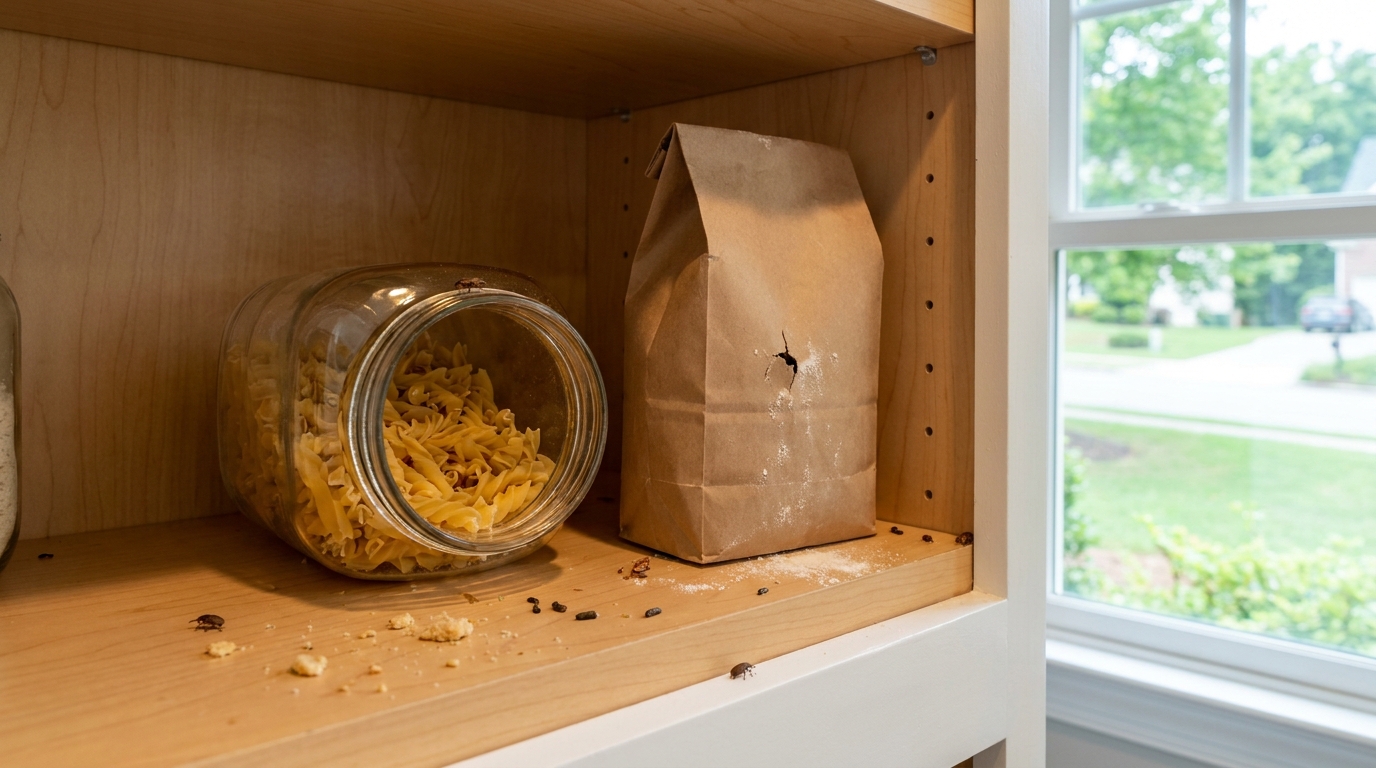
- The five most reliable signs of pantry pests are visible insects or larvae in food, silky webbing that clumps dry goods together, tiny chew holes in packaging, fine frass or powdery debris on shelves, and adult moths flying near kitchen lights at night.
- Indian meal moths, sawtoothed grain beetles, and rice weevils are the pantry pests most commonly found in Alpharetta-area kitchens due to the region’s warm, humid climate.
- Most infestations begin inside products that were already contaminated at a processing or packaging facility before reaching the home, making post-purchase inspection of dry goods an important prevention habit.
- Immediately discarding infested food in sealed outdoor bags, vacuuming all shelf surfaces, and transferring remaining dry goods to hard-sided airtight containers are the fastest DIY steps to limit spread.
- When adult moths are visible in multiple rooms or cleaning does not stop new sightings within one to two weeks, calling a licensed pest control professional is the most reliable path to full elimination.
- Storing all dry goods in airtight glass or thick plastic containers and inspecting the pantry monthly are the most effective long-term strategies for preventing pantry pest reinfestation.
Table of Contents
- Why Alpharetta Homes Are Vulnerable to Pantry Pests
- Sign 1: Visible Insects or Larvae Inside Food Packages
- Sign 2: Webbing, Silk Threads, or Clumping in Food
- Sign 3: Tiny Holes Chewed Through Packaging
- Sign 4: Fine Powder, Dust, or Frass Near Stored Goods
- Sign 5: Flying Moths Near Kitchen Light Sources at Night
- How to Get Rid of Pantry Pests Fast
- Preventing Pantry Pests From Returning
- Frequently Asked Questions
Pantry pests in an Alpharetta home are most commonly identified by finding small insects or larvae inside dry food packages, noticing webbing or silk threads in pantry corners, spotting tiny holes chewed through packaging, detecting a stale or musty odor coming from food storage areas, and discovering fine powdery debris or frass near stored goods. These five signs point to an active infestation that requires immediate action to prevent the pests from spreading to unaffected food and cabinet areas.
Why Alpharetta Homes Are Vulnerable to Pantry Pests
Alpharetta sits in Fulton County, Georgia, where the humid subtropical climate creates near-ideal conditions for stored-product pests. Warm summers and mild winters allow insects like the Indian meal moth (Plodia interpunctella), the sawtoothed grain beetle (Oryzaephilus surinamensis), and the cigarette beetle (Lasioderma serricorne) to breed year-round inside climate-controlled kitchens.
Grocery purchases are the most common entry point. Infested products are often packaged at a warehouse or processing facility long before they reach a store shelf, so the eggs or larvae arrive inside the bag before a homeowner ever opens it. Once inside a pantry, a single infested bag of flour, oats, or dried fruit can seed an entire cabinet within weeks.
Homes in newer Alpharetta subdivisions are not exempt. Even well-sealed modern kitchens can harbor pantry pests because the insects are small enough to squeeze through the folds of a paper grocery bag or migrate through micro-gaps between pantry shelves and walls.
For homeowners who want professional help early, Max Pest Solutions serves Alpharetta and surrounding communities with targeted pantry pest treatments.
Sign 1: Visible Insects or Larvae Inside Food Packages
The most obvious indicator of a pantry pest problem is finding live or dead insects directly inside a food container.
What to look for
- Indian meal moth larvae are off-white caterpillars, roughly 1/2 inch long, often found burrowed into cereal, cornmeal, or dried fruit. They leave a silky webbing behind them as they feed.
- Sawtoothed grain beetles are flat, elongated brown beetles about 1/10 inch long. Their thin body profile lets them slip inside sealed cardboard boxes without tearing them open.
- Weevils (rice weevils and granary weevils) are small, reddish-brown to black beetles with a distinctive long snout. Finding even one weevil inside a bag of rice is a reliable sign the container is infested.
- Cigarette beetles are small, oval, light-brown beetles about 1/8 inch long frequently found in spices, dried herbs, and pet food.
If live insects appear on pantry shelves outside any food package, the infestation has already progressed beyond a single container. At that stage, every item in the pantry should be inspected individually.
Sign 2: Webbing, Silk Threads, or Clumping in Food
Indian meal moth larvae spin silk webbing as they move through food. This webbing causes grain particles, cereal flakes, or flour to clump together in visible masses. The clumps may feel slightly sticky and will hold together even when a container is shaken.
Where to check
- Inside open bags of flour, cornmeal, oatmeal, and breadcrumbs
- Along the corners and fold seams of cardboard cereal boxes
- Behind canisters and on pantry shelf liners where webbing can anchor to the surface
- Inside pet food bags, which are a frequently overlooked infestation site
Webbing is particularly easy to spot when a pantry is cleaned out completely. Pulling every item off the shelf often reveals silky strands stretched across the back wall or ceiling of a cabinet that would otherwise go unnoticed.
Sign 3: Tiny Holes Chewed Through Packaging
Small, irregular holes in cardboard boxes or paper bags that were not present at purchase are a strong sign of pantry pest activity. Grain beetles and weevils are capable of chewing through thin packaging to access food inside.
This sign is easy to overlook because the holes are often smaller than a pencil tip. Checking the bottom and back of boxes is worth the effort since pests tend to enter from corners and seams where the material is weaker. Plastic packaging is not always a barrier either - some species can chew through thin polyethylene bags.
A useful habit is squeezing sealed packages before placing them in the pantry. Any package that collapses too easily or rustles when it should not may already be compromised.
Sign 4: Fine Powder, Dust, or Frass Near Stored Goods
Insect frass - the combination of excrement, shed skins, and feeding debris - appears as a fine powdery material that settles near or below infested food containers. For grain beetles and weevils, frass is pale to dark brown and may resemble fine sawdust.
How to distinguish frass from normal food dust
- Normal flour or grain dust is uniform in color and texture; frass tends to be mixed with tiny dark specks
- Frass often appears in places where food has not been spilled, such as underneath a sealed can or at the back corner of a shelf
- Running a finger across the shelf and examining what collects is a quick inspection method
Frass accumulation is also a sign that the infestation has been active long enough for multiple feeding and molting cycles to occur, which means population numbers are likely significant.
Sign 5: Flying Moths Near Kitchen Light Sources at Night
Adult Indian meal moths are approximately 5/8 inch long with a distinctive two-toned wing pattern: pale gray near the body and reddish-brown with a coppery sheen toward the tips. They are most active at dusk and night and are strongly attracted to light sources.
Finding adult moths flying near kitchen lights, ceiling fixtures, or windows adjacent to the pantry is a reliable late-stage warning sign. By the time adults are visible, larvae have already been feeding inside food packages for one to several weeks. The larval stage lasts roughly two to three weeks under warm conditions before pupation and adult emergence.
Sighting even one or two moths around the kitchen warrants a full pantry inspection. Moths seen in rooms beyond the kitchen suggest that larvae have migrated and may be pupating inside wall voids, under baseboards, or in upholstered furniture.
How to Get Rid of Pantry Pests Fast
Quick action limits how far an infestation spreads and reduces the cost of professional treatment.
Step 1: Empty and inspect the entire pantry
Remove every item from every shelf. Inspect each container individually, including sealed cans and jars that may have debris on the outside from contact with infested products. Any item showing signs of infestation should be placed in a sealed plastic bag and disposed of in an outdoor trash bin immediately - not in a kitchen wastebasket where adults can escape and reinfest.
Step 2: Vacuum and clean all surfaces
Vacuum shelves, corners, hinges, and the underside of shelving units. Use a narrow crevice attachment to reach the joints where shelves meet walls. After vacuuming, wipe all surfaces with warm soapy water. Empty the vacuum canister or replace the bag immediately after cleaning and place the waste outdoors.
Step 3: Transfer surviving food to airtight containers
Hard-sided airtight containers made of glass or thick plastic with secure lids are the best long-term storage solution for dry goods. Thin cardboard boxes and paper bags should not be used for long-term pantry storage in Georgia’s warm climate. Storing bay leaves inside containers of flour and rice is a folk method some households use as a deterrent, though evidence for its effectiveness is limited.
Step 4: Identify and eliminate the source
The original infested product is often a less frequently used item purchased weeks or months earlier. Cornmeal, birdseed, dried pet food, paprika, and specialty grains are common culprits that sit undisturbed long enough for an infestation to develop. Finding and removing the source is the single most important step in stopping the infestation from recurring.
Step 5: Call a licensed pest control professional
When a pantry pest infestation has spread beyond one or two containers, or when moths are visible throughout the kitchen, professional treatment is the most reliable path to full elimination. A licensed technician can inspect wall voids, cabinet interiors, and adjacent spaces that are not accessible during a DIY cleaning effort. Residual treatments applied to shelf surfaces and crack-and-crevice areas can eliminate larvae and adults that survive a thorough cleaning.
Max Pest Solutions provides residential pest control designed to address kitchen and pantry infestations with treatments that are safe for food preparation areas when applied according to label instructions.
Preventing Pantry Pests From Returning
Once an infestation is resolved, keeping pantry pests out requires a combination of storage habits and periodic inspection.
- Inspect groceries before storing them. Check the seams, corners, and packaging of every dry good brought home, especially bulk items from warehouse-style grocery stores.
- Store all dry goods in hard-sided airtight containers. Glass mason jars, thick plastic containers with locking lids, and metal tins all work well. Label containers with the purchase date.
- Rotate stock regularly. Older items should be used before newer purchases. Avoid letting specialty flours, cornmeal, or grains sit for more than three months without being used.
- Maintain consistent pantry temperature and humidity. Cooler, drier conditions slow the reproduction rate of stored-product insects. A small dehumidifier in a large pantry can help in Georgia’s humid climate.
- Inspect the pantry monthly. A five-minute check of every shelf can catch a new infestation before it spreads. Look at shelf liners, the back wall, and the underside of shelves as well as the food containers themselves.
Max Pest Solutions is located at 6535 Shiloh Rd #600, Alpharetta, GA 30005, and serves homeowners throughout the Alpharetta area and nearby communities. Homeowners can call +1404-424-9200 or visit https://www.maxpestsolutions.com to schedule an inspection.
Frequently Asked Questions
What are the most common pantry pests found in Alpharetta, GA homes?
The Indian meal moth, sawtoothed grain beetle, rice weevil, granary weevil, and cigarette beetle are the pantry pests most frequently identified in Alpharetta-area kitchens. The Indian meal moth is by far the most commonly reported because its larvae feed on a wide range of stored foods and the adult moths are large enough to be noticed easily. Georgia’s warm, humid climate supports active breeding throughout most of the year, making infestations faster to develop than in cooler regions.
How did pantry pests get into my sealed packages?
Most pantry pest infestations start at the processing or packaging facility, not inside the home. Weevils, grain beetles, and Indian meal moth eggs can be present inside products before they are packaged. The eggs are too small to be detected by visual inspection on a store shelf. Once inside a warm pantry, the eggs hatch and larvae begin feeding. Some species, like the sawtoothed grain beetle, can also chew through cardboard and thin plastic packaging to access food stored in adjacent containers.
Are pantry pests dangerous to human health?
Pantry pests are not known to transmit diseases to humans, and accidental consumption of larvae, eggs, or adult insects in contaminated food does not typically cause illness. However, some individuals experience allergic reactions or gastrointestinal irritation after consuming heavily infested food. The primary harm from pantry pests is food spoilage and economic loss from having to discard contaminated products. All infested food should be discarded as a precaution.
How long does it take to get rid of a pantry pest infestation?
A minor infestation caught early, limited to one or two food packages, can often be resolved within a few days through diligent cleaning, disposal of infested items, and restoring all dry goods to airtight containers. A more advanced infestation, particularly one involving Indian meal moths that have pupated in wall voids or ceiling areas, may require two to four weeks of follow-up even after professional treatment, as any remaining pupae will continue to produce adults until the pupal stage is complete. Professional treatment significantly shortens the timeline compared to DIY methods alone.
When should I call a pest control professional for pantry pests?
Professional help is warranted when adult moths are visible throughout the kitchen, when insects are found in multiple pantry locations outside food containers, when a thorough DIY cleaning does not stop new sightings within one to two weeks, or when the source of the infestation cannot be located. A licensed technician can perform a complete inspection, identify cryptic infestation sites, and apply targeted treatments to areas that DIY cleaning cannot reach. Homeowners in Alpharetta can contact Max Pest Solutions at +1404-424-9200 for a pantry pest inspection.