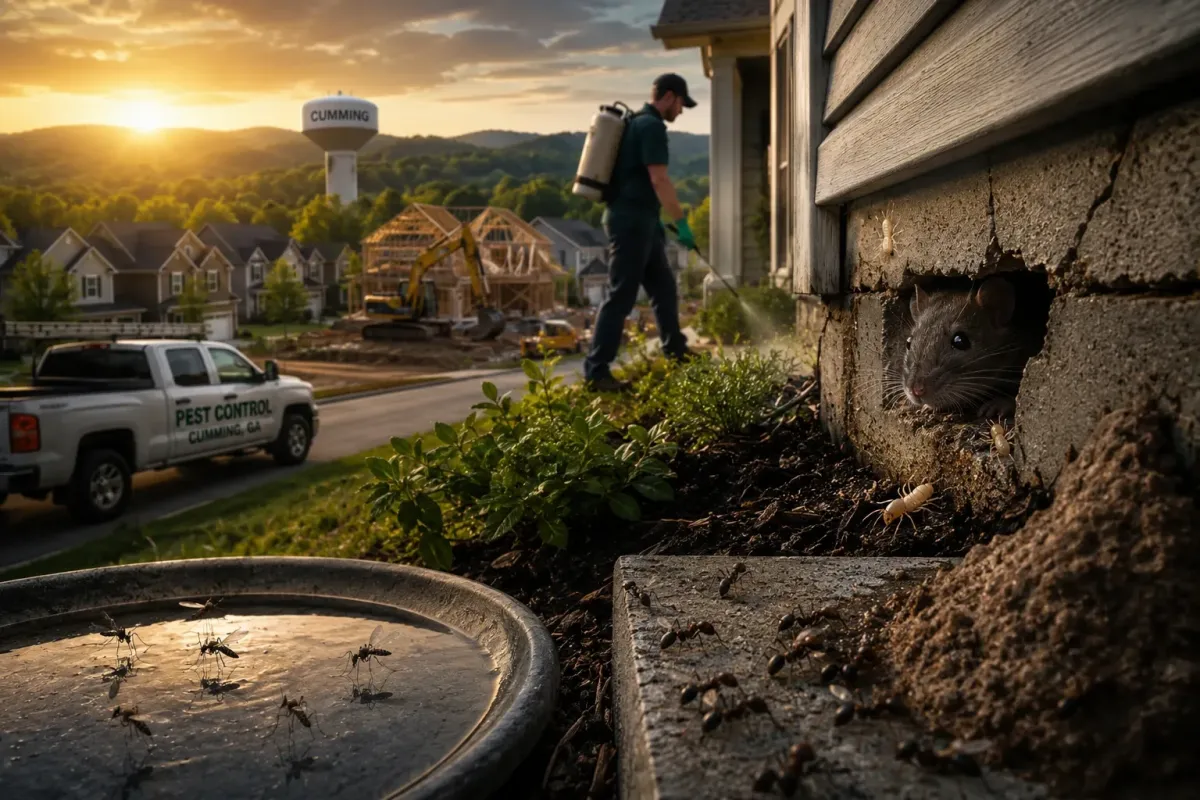
The Hidden Pest Highways of Cumming, GA
The Hidden Pest Highways of Cumming, GA: How Forsyth County's Growth Is Creating New Pest Challenges for Homeowners
When most homeowners think about pest infestations, they often blame the weather, seasonal changes, or a nearby food source. However, in Cumming, Georgia, there's another factor quietly contributing to increased pest activity: growth and development.
As one of the fastest-growing communities in North Georgia, Cumming has experienced significant residential and commercial expansion over the past decade. While this growth brings new opportunities and thriving neighborhoods, it also disrupts natural habitats, forcing insects and rodents to seek new shelter—often inside nearby homes.
Understanding how urban development influences pest behavior can help homeowners take a more proactive approach to pest prevention and protection.
Why Are Pest Problems Increasing in Growing Communities Like Cumming?
Every time land is cleared for a new subdivision, shopping center, roadway, or office complex, pests lose part of their natural environment.
Common pests affected by development include:
Ants
Rodents
Termites
Spiders
Cockroaches
Mosquitoes
Stinging insects
When these pests are displaced, they begin searching for:
Food sources
Moisture
Shelter
Nesting locations
Unfortunately, residential properties provide all four.
Quick Answer:
Yes, rapid development can increase pest activity in nearby neighborhoods because displaced pests often migrate toward established homes and landscaping.
The New "Pest Highways" Around Cumming Homes
Many homeowners don't realize that pests rarely appear randomly.
They travel through what pest professionals often call "pest highways."
These pathways may include:
Landscaping Connections
Mulch beds, shrubs, and decorative plants can act as bridges that guide insects directly to a home's foundation.
Utility Corridors
Underground utilities, drainage systems, and sewer lines provide hidden routes for rodents and insects.
Construction Zones
Active construction sites disturb soil and underground colonies, particularly termites and ants.
Green Space Transitions
Homes located near wooded areas, parks, and retention ponds often experience higher pest pressure as wildlife and insects move between habitats.
Which Pests Are Most Common in Cumming, GA?
Termites
North Georgia's warm climate and moisture-rich soil create ideal conditions for termites.
Homeowners should watch for:
Mud tubes
Hollow-sounding wood
Swarming termites in spring
Damaged baseboards
Rodents
As development expands into wooded areas, mice and rats lose nesting locations and seek shelter in garages, attics, and crawl spaces.
Signs include:
Droppings
Gnaw marks
Scratching sounds
Food contamination
Mosquitoes
Cumming's ponds, creeks, and humid summers provide ideal mosquito breeding conditions.
Common breeding sites include:
Birdbaths
Clogged gutters
Plant saucers
Standing water around foundations
Fire Ants
Newly disturbed soil often becomes a prime location for fire ant colonies.
These pests can quickly establish mounds throughout lawns and landscaped areas.
Why DIY Pest Control Often Falls Short
Many homeowners attempt to solve pest issues using store-bought sprays and traps.
While these products may reduce visible activity temporarily, they rarely address the root cause.
Common DIY limitations include:
Missing hidden nesting sites
Incomplete treatments
Failure to identify entry points
Lack of seasonal prevention strategies
Successful pest management requires understanding why pests are present—not just eliminating the ones you can see.
A Smarter Pest Control Strategy for Cumming Homeowners
The most effective pest control programs focus on prevention rather than reaction.
Start With a Professional Inspection
A comprehensive inspection can identify:
Pest entry points
Moisture issues
Structural vulnerabilities
Active infestations
Reduce Moisture Around the Home
Many pests thrive in damp environments.
Homeowners should:
Repair leaks
Clean gutters
Improve drainage
Ventilate crawl spaces
Maintain Landscaping
Trim vegetation away from the home's exterior and avoid excessive mulch buildup near the foundation.
Schedule Regular Pest Monitoring
Routine inspections help detect pest activity before infestations become costly.
Frequently Asked Questions About Pest Control in Cumming, GA
Why do I suddenly have more pests after nearby construction?
Construction disrupts natural habitats and underground colonies, causing insects and rodents to relocate to nearby properties.
What is the most common pest problem in Cumming?
Termites, ants, mosquitoes, rodents, and spiders are among the most frequently reported pest issues in the area.
How often should a home receive pest control treatment?
Most homes benefit from quarterly pest control services, though treatment frequency may vary based on property conditions and pest pressure.
Can pest problems affect property value?
Yes. Unaddressed infestations, especially termites and rodents, can cause structural damage and impact property value.
Is year-round pest control necessary in Georgia?
Yes. Georgia's mild climate allows many pests to remain active throughout the year.
The Future of Pest Prevention in Cumming
As Cumming continues to grow, pest populations will continue adapting alongside development. Homeowners who understand these changing patterns can better protect their properties through proactive inspections, preventative treatments, and ongoing monitoring.
Rather than waiting for pests to become a visible problem, a strategic pest management plan helps maintain a safer, healthier, and more comfortable home throughout every season.
Final Thoughts
Pests don't appear by accident. In many cases, they follow pathways created by environmental changes, construction activity, and shifting habitats. As Cumming continues to expand, homeowners who stay ahead of these trends will be better positioned to protect their homes and families from unwanted pests.
By focusing on prevention, habitat management, and professional pest control solutions, residents can enjoy the benefits of living in one of Georgia's fastest-growing communities—without sharing their homes with pests.
